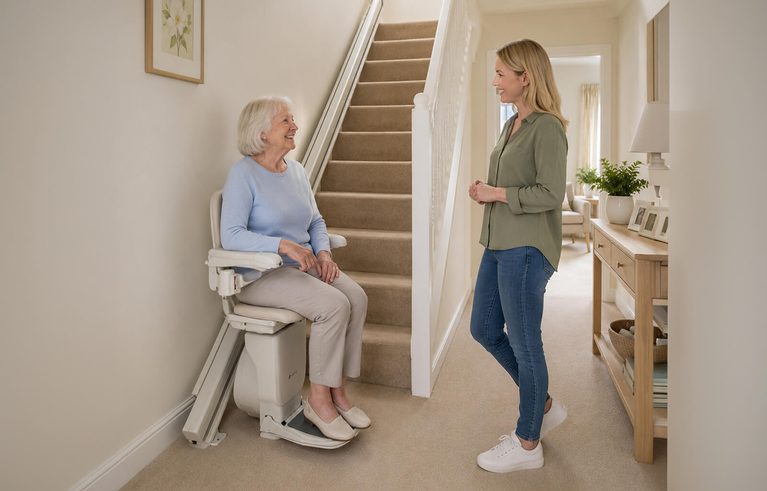
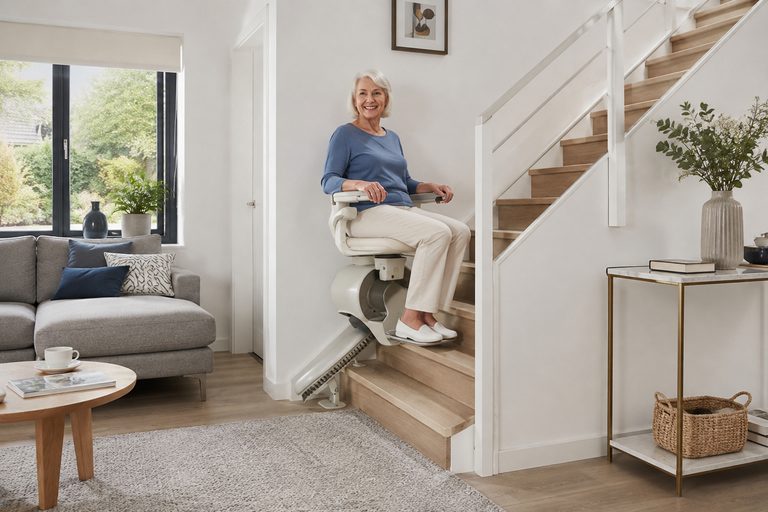
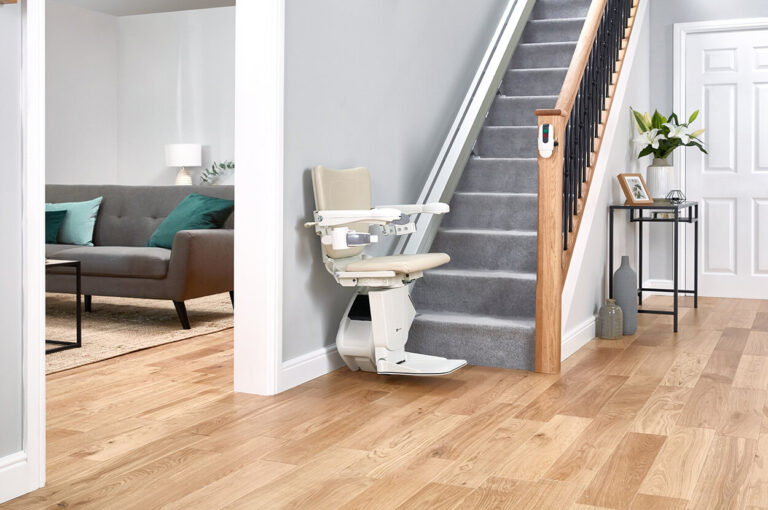
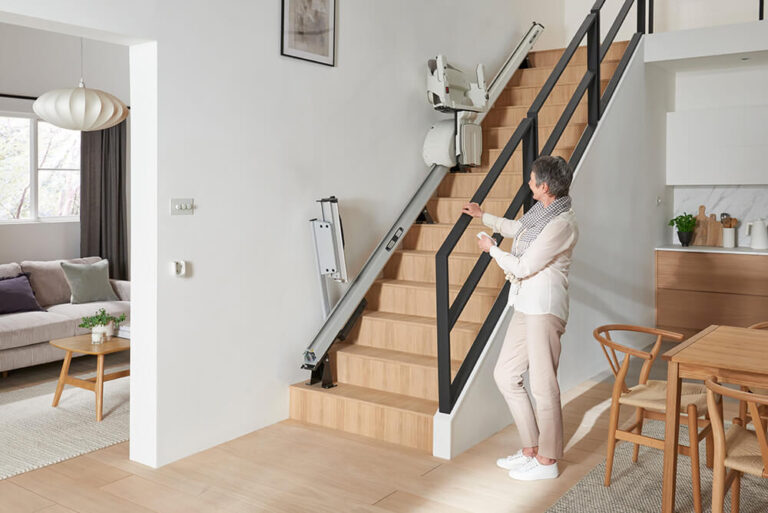
There’s rarely a single moment when someone decides they need a stairlift. More often, it’s gradual, and built off a growing list of small doubts or concerns.
The stairs feel a little steeper. You pause halfway to catch your breath. You reach for the bannister more firmly than you used to. You tell yourself you’re just being careful.
And you probably are. But at some point, it becomes worth it to see whether the time has come for a stairlift.
Not because you’ve “given in”, or something terrible has happened. But because staying independent often means recognising change early, before a near miss becomes something worse.
This guide isn’t here to help guide you towards a decision, because for many people, the signs are subtle long before they’re serious.
Why people wait longer than they should
In our experience, most people wait. They manage. They adapt. They go slower. They tell themselves they’re fine.
Understandably, there’s often pride involved. A stairlift can feel like an admission that something has changed. For some, it symbolises ageing more than it represents practicality.
Others don’t want to “make a fuss”. They don’t want their family to worry. They don’t want to feel dependent.
And sometimes, because nothing catastrophic has happened yet, it feels easier to leave things as they are.
The difficulty is that stairs don’t usually become dangerous overnight. It’s a gradual change, as confidence slips and small adjustments become routine.
Recognising that early isn’t weakness. It’s sensible.
What are the signs it might be time for a stairlift?
Sometimes, the need for a stairlift can be sudden: the result of an accident that changes our way of life for good. Other times, it’s a mixture of physical, behavioural, and emotional shifts that necessitate action.
The physical signs
You might notice you’re climbing one step at a time instead of alternating feet. You may lean more heavily on the bannister. Descending feels less stable than going up. Your hips ache, or your knees start to tremble halfway through.
Breathlessness can creep in too. A short pause at the landing becomes normal. Carrying laundry upstairs feels like more effort than it used to.
None of these alone automatically mean you need a stairlift. But taken together, they show that the stairs are demanding more from you than they once did.
It’s also worth remembering that going down the stairs often carries more risk than going up. It requires greater balance and control. If descending feels noticeably more uncomfortable or uncertain, that’s a meaningful signal.
The behavioural signs
Sometimes the change isn’t about how the stairs feel, but how you behave around them.
Perhaps you’ve started leaving things downstairs rather than making extra trips. Maybe you delay going upstairs until you really have to. Some people temporarily move to sleeping downstairs after illness or surgery and never move back.
Showers might be postponed if the bathroom is upstairs. Laundry builds up because carrying it feels awkward. You may think twice before going up in the evening if you’re alone.
These aren’t dramatic changes, but over time, they shrink how you use your home. When parts of your house become “less accessible”, independence narrows too.
The emotional signs
Confidence is often the biggest indicator, and the hardest to admit.
Do you hesitate before starting the stairs? Do you prefer someone else to be at home when you go up? Have you become more irritable when family raise the subject?
Anxiety around stairs can grow in the background, and while it may not be obvious, it changes how you feel in your own home.
Your home should feel safe and comfortable, not like something you need to approach cautiously.
When a stairlift may not be the right solution
A stairlift isn’t automatically right for everyone.
If mobility difficulties are temporary, such as following a short-term injury, other adjustments might be more appropriate.
In cases of significant cognitive impairment, operating controls safely may require additional consideration.
If someone cannot transfer independently from standing to sitting, further support or alternative equipment may be needed.
That’s why a proper home assessment matters to ensure the solution suits both the person and the property.
What are the benefits of a stairlift?
When people think about stairlifts, the first benefit that usually comes to mind is safety. And that’s absolutely right. Removing the physical strain and uncertainty of climbing stairs reduces the risk of falls.
But the benefits of a stairlift reach much further than that.
Restored independence
One of the most immediate changes is freedom of movement within your own home.
Instead of planning trips upstairs carefully or avoiding them altogether, you can move between floors whenever you choose, ensuring that everything becomes easily accessible once more.
You’re no longer dependent on someone being nearby or waiting for help. You’re simply using your home as it was intended.
For many people, that return of independence is the most valuable benefit of all.
Renewed confidence
Struggling on the stairs can gradually chip away at confidence. Even if you haven’t fallen, the fear of falling can sit in the background.
A stairlift removes that hesitation. The journey becomes predictable, steady and controlled. There’s no need to brace yourself before going down or pause halfway to steady your breathing.
That sense of calm has a bigger impact than people expect. It reduces daily anxiety and restores comfort in your own surroundings.
Reduced strain on joints and muscles
Stairs place significant pressure on knees, hips and ankles. For those living with arthritis or reduced mobility, repeated trips can worsen pain and fatigue.
A stairlift removes that physical strain entirely. Instead of managing discomfort multiple times a day, you can conserve your energy for the things you actually enjoy doing.
Peace of mind for family
The benefits of a stairlift extend beyond the person using the lift.
Adult children often worry quietly about their parents navigating the stairs. Partners may feel uneasy leaving someone alone at home. Even small stumbles can create ongoing concerns that are hard to ignore.
Installing a stairlift eases that background anxiety for everyone involved. There’s reassurance in knowing that movement between floors is secure and controlled.
Staying in the home you love
For many people, the stairs are the only barrier to remaining in their home long-term. 90% of seniors would prefer to stay at home rather than move to a care home.
Which is completely understandable. Moving house can be disruptive, emotional and expensive. A stairlift can provide a far simpler solution, allowing you to continue living in familiar surroundings without compromise.
A proactive, not reactive, decision
Perhaps one of the most overlooked benefits is timing. Some people might choose to wait, but in doing so, you are simply waiting for the moment when you have a bad fall.
The hard truth is that preventative action is usually safer than reactive action. After a fall, confidence is often shaken. Recovery can take time. The decision then feels urgent rather than measured.
Choosing to install a stairlift before something serious happens can feel like you’re staying one step ahead. It’s about recognising change and responding sensibly.
A low-cost option
Compared to a care home or moving home to a single-level bungalow, installing a stairlift is a relatively low-cost option, and it could add value to your house in the longer term.
Comfortable and pain-free
A stairlift will increase your quality of life. With increased freedom, comfort and pain-free journeys, suddenly you feel a jump in your quality of life.
How to decide if it’s time for a stairlift
If you’re unsure whether it’s time for a stairlift, try not to overcomplicate the decision. There are some questions you should ask:
- Do the stairs still feel safe and comfortable, or are you simply managing them?
If you’re pausing more often, holding the rail tightly, avoiding extra trips upstairs, or feeling uneasy when nobody else is home, those are important signs. They don’t mean you must act immediately, but they do suggest the stairs are becoming more of a strain than they once were.
- How do you expect the stairs to feel in six months? Or a year?
It can also help to think ahead. Many families tell us they wish they’d made the decision slightly earlier, calmly and on their own terms, rather than after a fall or a scare forced the issue.
If you’re still uncertain, the next step is simply gathering information. A proper home assessment will tell you:
- Whether your staircase is suitable
- Whether a stairlift is the right solution
- What your options are
There’s no obligation in asking. Just having clear answers makes the decision much easier for everyone involved. Because this isn’t about giving something up. It’s about making sure your home continues to work for you safely and confidently.
Arrange a free, no-obligation consultation with Simply Stairlifts
A stairlift isn’t a sign of decline. Recognising the signs that your lifestyle has changed is about maintaining your independence in your own home.
If you’re unsure whether a stairlift is right for you, your best decision is to arrange a free, no-obligation consultation. Simply Stairlifts is here to offer reassurance, guidance and professional support whenever you need it.
Our experienced electrical and mechanical engineers are qualified to install, remove, repair and service any stairlift in South West England. If you need to book in a stairlift repair or require a new or reconditioned stairlift, you can contact our team today to see how we can help.
Contact our team now
Find out more helpful information about stairlifts on the Simply Stairlifts advice page…
How much does a stairlift cost? | What to look for in a stairlift supplier? | Funding a Stairlift: Everything You Need to Know About Stairlift Grants