If you’re researching stairlifts for a parent or older relative, one of the most common questions asked is, ‘How much weight can a stairlift actually hold?’
The answer isn’t a single universal number. Stairlift weight limits vary depending on the model, the staircase layout, and the way the lift is installed. In this guide, we’ll explain how stairlift weight limits work, why they vary, and what families should consider when deciding whether a stairlift is suitable for their home.
What is the maximum weight for a stairlift?
In the UK, modern stairlifts are designed to support users weighing between 136 kg and 160 kg (roughly 21 to 25 stone).
However, it’s important to understand that there is no single universal weight limit for all stairlifts. The maximum user weight depends on the specific model, the design of the rail system, and the way the lift is installed on the staircase.
Manufacturers test each stairlift model under controlled conditions and publish a maximum rated capacity, which represents the maximum weight the lift can safely carry while operating reliably over time.
It is not a guideline or recommendation, but a safety limit built into the engineering design of the lift.
For example, a stairlift installed on a straight staircase with a standard rail may have a higher maximum capacity than the same lift installed on steeper stairs or with additional rail features such as a hinge.
Because of this, two homes using the same stairlift model may still have slightly different weight ratings depending on how the lift is configured.
Stairlift weight limits are calculated with long-term safety and reliability in mind. A lift that consistently operates near its maximum rating may experience greater mechanical stress over time. For this reason, it’s recommended to choose a stairlift that comfortably supports the user’s weight rather than selecting one operating right at its limit.
Because the exact rating can vary depending on the staircase layout and installation details, the safest approach is always to confirm the specific weight capacity of the stairlift being installed in your home.
A professional assessment allows installers to measure the staircase, determine the correct rail configuration, and recommend the model that will operate safely for the user.
What are the weight limits for leading UK stairlift models?
Weight limits ultimately come from the manufacturer’s technical specifications for each stairlift model. Below are examples of weight capacities for several well‑known stairlift models commonly installed in the UK.
Please note: these figures are based on publicly available manufacturer specifications and should always be confirmed with the installer or manufacturer before installation:
| Manufacturer | Model | Maximum user weight |
| Access BDD | HomeGlide | Up to 160kg (25 stone) on shallower stairs, and around 136kg (21 stone) on steeper installations |
| Stannah | Siena / Starla | Up to 160kg (25 stone) on straight staircases; lower limits may apply on curved installations |
| Handicare | 1000 (Straight Stairlift) | Typically up to 137kg (21.5 stone) depending on seat type |
| Platinum Stairlifts | Ergo Straight | Typically up to 140kg (around 22 stone), depending on configuration |
Weight limits are not identical across all stairlifts, and the same model may have slightly different limits depending on the installation.
Why do stairlift weight limits vary?
There are several factors that influence how much weight a stairlift can safely carry, including the type of staircase, its steepness, and more:
Straight vs curved staircases
Straight staircases typically allow for higher weight capacities than curved ones. The reason for this is that a straight rail runs in a single line up the staircase, allowing the lift system to distribute weight more evenly along the track.
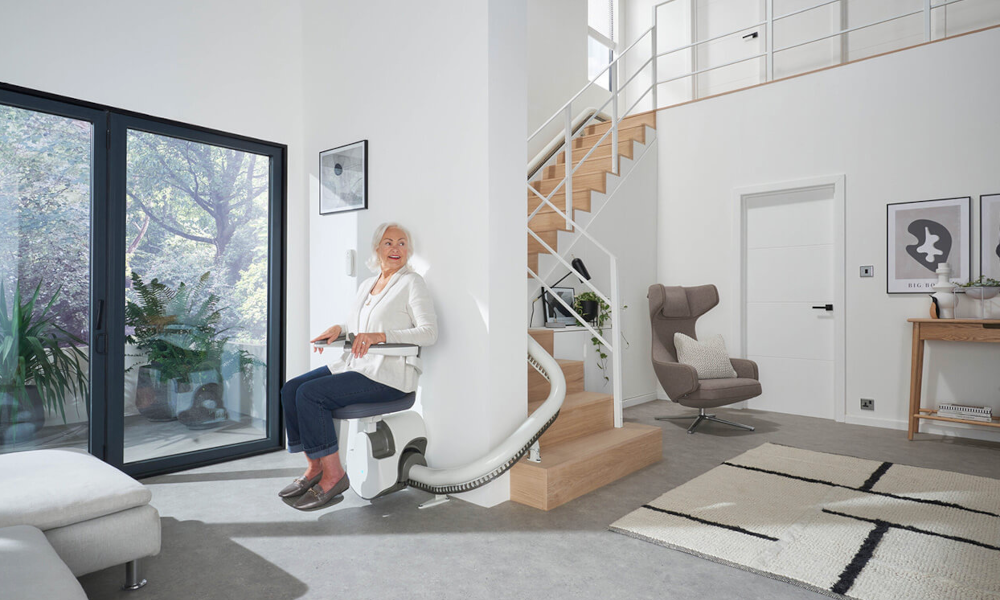
Curved staircases, by contrast, require custom-built rails that follow corners and changes in direction. Because the lift must navigate bends and tighter mechanical tolerances, some curved stairlifts may have slightly lower weight limits than comparable straight models.
Staircase angle
The steepness of the stairs can also affect the maximum capacity. Some stairlifts are rated differently depending on the angle of the staircase.
When a stairlift travels up a steeper incline, the motor and drive system need to work harder to lift the user against gravity. This increases the mechanical load placed on key components such as the motor, gearbox, rail system, and braking mechanisms.
To ensure the lift continues to operate safely and reliably over time, a stairlift may have a lower maximum weight for steeper staircases.
For example, a stairlift might support up to 160 kg on shallower stairs but have a lower rating on steeper installations where the motor must generate more lifting force.
This is why installers measure the angle of the staircase during a home assessment. The incline helps determine the correct rail configuration and ensures the stairlift selected can safely support the user while travelling up and down the stairs.
Rail configurations
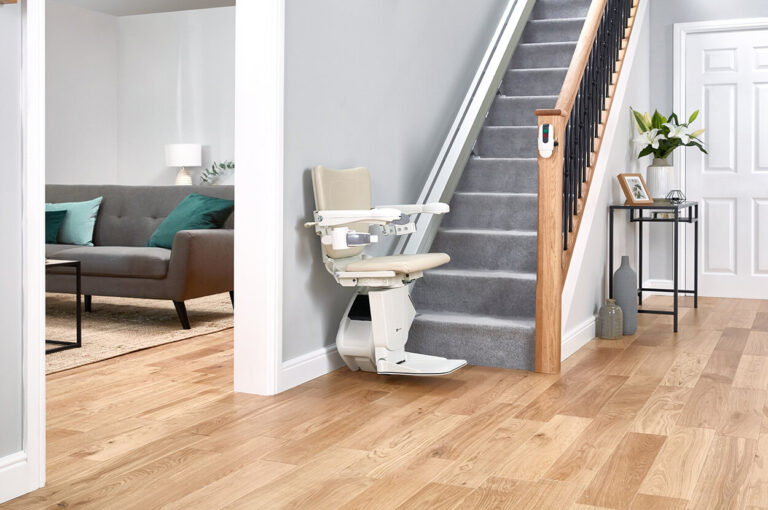
In some homes, stairlifts include hinged rail sections, which allow the bottom of the track to fold away so that doorways or hallways remain clear.
When the stairlift is not in use, the hinged section can lift or fold upwards to keep the space open and reduce the risk of people tripping over the rail. This can make stairlifts much more practical in homes with limited hallway space.
However, adding a hinge introduces additional moving components into the rail system. Because the rail must remain stable and secure while supporting the user and the stairlift carriage, there may be a slightly lower weight rating for installations that include hinged sections.
This does not mean hinged rails are unsafe. They are designed and tested to operate reliably within their specified limits. It simply means that the exact configuration of the rail can influence the final weight capacity of the stairlift installation.
Standard vs heavy-duty stairlifts
Stairlifts are generally designed in two broad categories: standard stairlifts and heavy-duty (or higher-capacity) stairlifts.
Standard stairlifts are the most common type installed in UK homes and are designed to have a weight capacity of around 120–136 kg (19–21 stone). These lifts are built with compact seats and rail systems that fit comfortably on most staircases.
Heavy-duty stairlifts, sometimes called higher-capacity stairlifts, are designed for situations where a standard model may not provide enough support or space. These lifts are engineered to accommodate users who require a higher weight capacity or a larger seating area.
Compared with standard models, heavy-duty stairlifts often include reinforced rail systems to handle greater loads, with more powerful motors and drive mechanisms. These models typically have wider and deeper seats and stronger frames for additional support.
These design changes allow heavy-duty stairlifts to support higher maximum user weights, often reaching around 160 kg (25 stone) or more depending on the model and staircase configuration.
It’s also worth noting that heavy-duty stairlifts may require slightly wider staircases to install safely because of the larger seating area. During a home assessment, installers will check whether the staircase has enough space and recommend the most appropriate type of stairlift for the user.
Do reconditioned stairlifts have the same weight limits?
Reconditioned stairlifts are usually a cost-effective alternative to brand-new models, but an important question many people have is whether they operate under the same weight limits.
In most cases, the maximum weight capacity of a reconditioned stairlift is exactly the same as when the lift was originally manufactured. This is because the weight limit is determined by the engineering design of the stairlift itself, including the motor, rail system, drive mechanism, and seat frame.
Refurbishing the lift does not change these core components or the tested limits set by the manufacturer.
When a stairlift is professionally reconditioned, it is typically removed from a previous installation, inspected, cleaned, and refurbished before being fitted in a new home.
During this process, the refurbisher will check the motor and drive system, rail and carriage mechanisms, batteries, sensors, brakes, and other electrical components to ensure that they are working correctly.
Any worn parts can be replaced during refurbishment to ensure the stairlift operates safely and reliably. However, the lift must still be used within the original manufacturer’s rated capacity.
And, as with new stairlifts, reconditioned stairlifts will be susceptible to the same weight limit variations that come from the installation itself. During a home assessment, the stairlift provider will always confirm the appropriate model and weight rating. This ensures the stairlift installed is suitable for both the user’s needs and the layout of the staircase, regardless of whether the lift is new or reconditioned.
What other factors matter besides weight?
Although weight capacity is an important consideration, it is not the only factor that determines whether a stairlift is suitable for a particular home. Installers typically look at a combination of physical measurements, user needs, and safety considerations before recommending the most appropriate model.
Staircase width
One of the first things assessed during a stairlift survey is the width of the staircase. Most stairlifts require roughly 740 mm of staircase width to install safely and allow the lift to travel comfortably along the rail.
This ensures there is enough room for the chair, the rail system, and the user while the lift is in motion. In addition, the seat, arms, and footrest on most stairlifts can fold away when not in use. This helps keep the staircase as clear as possible so that other members of the household can continue using the stairs safely.
If the staircase is particularly narrow, installers may need to consider compact stairlift models or alternative rail configurations to ensure safe operation.
Safe transfer
The process of sitting down and standing up from the stairlift, often referred to as a safe transfer, is another factor in choosing the right system.
Most stairlifts include features designed to make this process easier and safer. These may include swivel seats that rotate at the top of the staircase, supportive armrests, and seatbelts that help keep the user stable while the lift is moving.
Installers will usually assess whether the user can comfortably access the seat, operate the controls, and exit the stairlift safely at both the top and bottom of the stairs.
Comfort and seating size
Comfort is also an important consideration, particularly for stairlifts that will be used frequently. Seat size, seat height, and the amount of support provided by the armrests and backrest can all affect how comfortable the stairlift feels during everyday use.
Some users may benefit from wider seating, additional padding, or slightly different seat heights depending on their mobility needs. A stairlift that fits the user properly can make a significant difference to overall safety and usability.
For these reasons, a professional home assessment is typically recommended. This allows installers to evaluate the staircase, measure the available space, and ensure the stairlift selected provides the right combination of safety, comfort, and practicality for the home.
What are the UK safety standards for stairlifts?
Stairlifts installed in the UK are built and tested to strict safety standards to ensure they operate reliably. These standards are designed to make sure stairlifts are safe to use, durable over time, and able to operate correctly under normal household conditions.
One of the most important standards is BS EN 81-40, which covers the design, construction, installation, and testing of stairlifts and other inclined mobility lifts. This standard sets requirements for important safety features such as:
- secure seatbelts and seating systems
- obstruction sensors that stop the lift if something blocks the track
- emergency stop controls
- safe starting and stopping speeds
- reliable braking systems
Manufacturers must test stairlifts to ensure they can safely carry their rated weight capacity while travelling up and down the rail.
Stairlifts sold in the UK also usually carry UKCA certification, which confirms that the product complies with relevant safety regulations and manufacturing standards.
Stairlifts installed in private homes are generally not subject to the same legal inspection rules as lifting equipment used in workplaces. However, reputable providers still recommend regular servicing, usually once a year, to check key components such as the motor, batteries, rail system, and safety sensors.
Regular servicing helps ensure the stairlift continues to operate smoothly and safely for many years. If you want to learn more about stairlift servicing, you can speak to our team.

Frequently Asked Questions
Do curved stairlifts have lower weight limits?
In some cases, yes. Curved stairlifts often have slightly lower weight limits than comparable straight models because the rail must navigate bends and corners. The additional mechanical forces created when the lift travels around curves can affect the maximum rated load.
Can a stairlift carry 25 stone?
Some higher‑capacity stairlifts can support around 25 stone (160 kg), particularly on straight staircases. These models may include reinforced rails, stronger drive systems, and larger seats to accommodate higher weight limits while maintaining safe operation.
Are stairlift weight limits strict?
Yes. The published weight limit represents the maximum safe operating capacity tested by the manufacturer. Stairlifts should always be used within these limits to ensure safe and reliable operation over time.
Does the staircase affect the weight limit?
Yes. The layout and physical characteristics of the staircase can influence the maximum weight rating of a stairlift installation. Factors such as staircase angle, rail configuration, curved sections, and hinged rails may all affect the final capacity that can be safely supported.
Find the right stairlift with Simply Stairlifts
Because stairlift weight limits depend on the staircase, the lift model, and the installation configuration, the most reliable way to determine the correct capacity is through a professional home assessment.
Simply Stairlifts is here to offer reassurance, guidance and professional support whenever you need it.
Our experienced electrical and mechanical engineers are qualified to install, remove, repair and service any stairlift in South West England. If you need to book in a stairlift repair or require a new or reconditioned stairlift, you can contact our team today to see how we can help.
Contact our team now
Find out more helpful information about stairlifts on the Simply Stairlifts advice page…
How much does a stairlift cost?| What to look for in a stairlift supplier?| Funding a Stairlift: Everything You Need to Know About Stairlift Grants