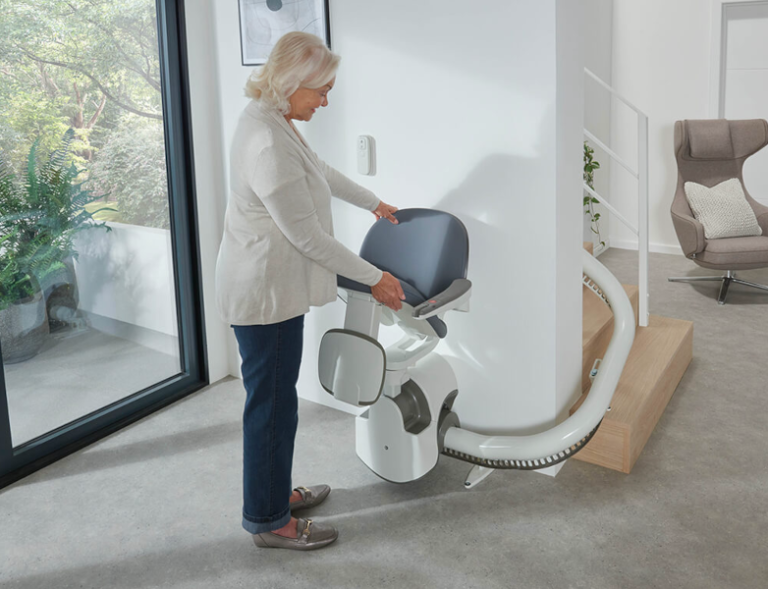
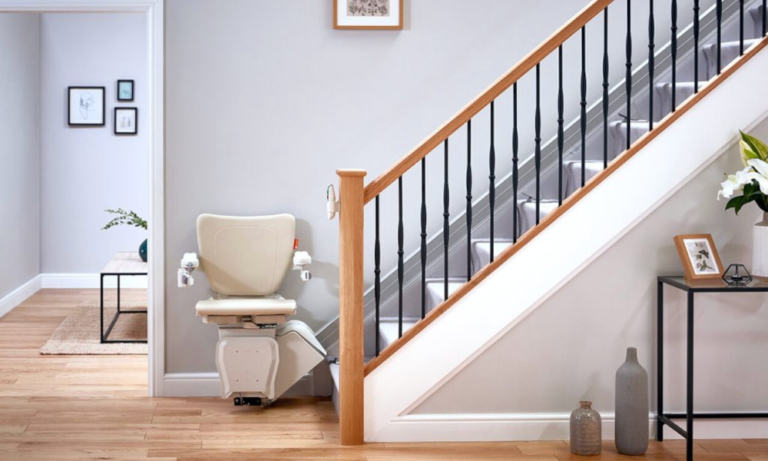
A stairlift stopping unexpectedly can be unsettling, especially if you rely on it every day to move safely around your home, but in many cases the cause is far less serious than it first appears.
In fact, a large proportion of call‑outs could be avoided by checking a few basic things before assuming something major has gone wrong. In this guide, we will explain the most common quick fixes, and when it’s time to call Simply Stairlifts for help.
The “quick fix” checks
Power issues are by far the most common reason a stairlift refuses to move.
Before worrying about mechanical faults, it’s worth taking a moment to check that the lift is actually receiving power. The master power switch and the on/off switch both need to be in the correct position, and it’s fairly easy for one of them to be knocked accidentally during cleaning or when someone brushes past the lift.
The power cable should also be checked at both ends to make sure it hasn’t come loose. If the lift still appears lifeless, testing the wall socket with a lamp or small appliance can confirm whether the outlet itself is functioning. A tripped fuse or circuit breaker can also cut power to the stairlift without warning, so it’s best to check the fuse box if everything else appears normal.
A lot of stairlifts also have a key switch, usually found on the armrest or carriage. If the key has been removed or turned to the off position, the lift will not respond at all. Some models also include a battery disconnect switch on the carriage, which can be turned off unintentionally. Ensuring this switch is set to the correct position is another quick and simple check.
The last thing to consider here are the safety features designed to prevent the lift from moving if anything is out of place.
A swivel seat that hasn’t been locked back into the travel position will stop the lift immediately, as will armrests that are not fully lowered. Even a slight lift of an armrest can activate the safety circuit.
These features are essential for safe operation, but they can also be the source of frustration if you’re unaware they’ve been triggered. Taking a moment to check the seat, armrests, and general positioning of the lift often resolves the issue without the need for further action.
To summarise, the key things to check are:
- The master switch, on/off switch and power cable are all connected and switched on
- The wall socket is working correctly
- The fuse box contains no tripped fuses or circuit breakers
- The key switch is inserted and turned on
- The battery disconnect switch is turned on
- The safety features have not stopped the lift (if the seat isn’t locked in place or if armrests aren’t fully lowered)
Many issues resolve quickly once these simple checks are completed. However, there are more issues that can arise that require more attention.

Understanding the error signals
Modern stairlifts are designed to indicate when something isn’t quite right, and understanding these signals can save a great deal of time.
Diagnostic lights are usually the first sign of a problem. If there are no lights at all, the lift is almost certainly not receiving mains power. When the transformer is illuminated, the colour of the light can often mean:
- A yellow glow usually means the batteries are charging
- A green light indicates they are fully charged
- A red light may suggest a charging issue or a loose connection
Although different models vary slightly, these general principles apply to most stairlifts.
Sound signals are another indicator. A continuous beeping noise is one of the most common alerts and typically means the lift is not parked correctly on its charging point. This can happen if the lift has stopped just short of the correct position or if it has been moved manually. Returning it to the charging point normally stops the beeping within a few seconds.
Shorter chirps or patterned beeps can indicate that a safety device has been activated or that the lift has detected a minor fault. These sounds are designed to draw attention to an issue before it becomes more serious.
A lot of stairlifts also feature a small digital display on the carriage that shows numbers or letters when a fault is detected. These codes vary between manufacturers, but they generally point to issues such as charging problems, activated safety sensors or minor circuit faults.
At this stage, the next step is to consult the manufacturer’s user manual for your specific model. This will explain what each code or beep means, but as a general rule, if the same code continues to appear after a reset, it’s a sign that the lift needs professional attention.
If you are unsure, now is the time to call Simply Stairlifts. Our experts should be able to determine the root cause, and explain the necessary steps to fixing the problem.
The key things to remember here are:
- Diagnostic lights indicate whether the lift is receiving power or charging correctly
- No lights usually mean no mains power
- Yellow or green lights relate to charging status, while a red light may be a charging or connection issue
- Continuous beeping often means the lift isn’t parked on its charging point
- Shorter beep patterns can signal activated safety sensors or minor faults
- Digital displays show error codes that point to specific issues
- Call Simply Stairlifts if you are unsure, or if the issue persists

Mechanical and path obstructions
Obstructions on or near the track are another common cause of stairlift stoppages.
Everyday household items can easily find their way onto the stairs, and even a small object can activate the safety sensors. It’s worth taking a slow, careful look along the entire length of the track to make sure that nothing is blocking the lift’s path.
Dust or debris around the footrest sensors can also cause the lift to stop unexpectedly. Clearing the area or lightly tapping the sensor can sometimes release it if a minor obstruction has triggered it.
Remote control issues can also give the impression that the lift has stopped working, when in fact the problem lies with the handset rather than the stairlift itself. If the lift responds to the controls on the armrest but not to the remote, the batteries in the handset are the most likely culprit.
If the remote still doesn’t work, it may need pairing or inspection, but this is something best left to a technician.
A simple system reset can also be surprisingly effective. Turning the stairlift off, waiting around thirty seconds, and then turning it back on can clear minor glitches in the control system. This is similar to restarting a computer or phone and often restores normal operation.
However, if the lift continues to stop mid‑track, moves erratically or makes unusual noises, it’s important not to force it to continue, as this is an indication of internal mechanical wear or a developing fault that requires professional attention.
If you are ever unsure, it is always safer to stop using the lift and contact Simply Stairlifts for guidance.
The main to keep in mind here are:
- Everyday items on the stairs can activate safety sensors and stop the lift
- Dust or debris around the footrest sensors can cause unexpected stoppages
- Remote control problems are often caused by weak or incorrectly fitted batteries
- A simple system reset can clear minor glitches in the control system
- Jerky movement, unusual noises, or repeated stoppages may mean mechanical issues
- If unsure, stop using the lift and contact Simply Stairlifts

When to call a professional
Although a number of stairlift problems can be resolved with simple troubleshooting, there are times when calling a professional is the safest and most sensible option.
Battery issues are a good example. The main batteries inside a stairlift are not designed to be replaced by the user. They are heavy, wired into the system, and require proper testing and disposal.
If your stairlift has been parked correctly on its charging point for an hour but still refuses to hold a charge, the batteries may be nearing the end of their life. In this situation, a trained engineer should carry out the replacement to make sure everything is fitted and tested correctly.
Internal mechanical faults also require professional attention. If you hear grinding, squeaking or clunking noises, it may indicate that internal components are wearing out. Jerky or uneven movement suggests the lift is struggling to travel smoothly along the rail.
These issues can worsen quickly if ignored, and continuing to use the lift may cause further damage or compromise safety. An engineer will be able to diagnose the cause and carry out any necessary repairs.
Persistent error codes are another clear indicator that it’s time to call Simply Stairlifts. Stairlifts are designed to stop when they detect a potential problem, so repeated stoppages should never be ignored.
If the same code appears repeatedly after a reset, or if the lift stops unexpectedly without an obvious obstruction, there may be an electrical or mechanical issue that needs attention.
Above all, trust your instincts. If something doesn’t feel right, or if you are unsure whether it is safe to continue using the lift, it’s always better to seek professional advice.
Simply Stairlifts offers friendly, clear support and can help you get your stairlift back to full working order as quickly as possible. If the issue cannot be resolved over the phone, we can arrange a repair appointment with you.
Remember:
- Stairlift batteries should only be replaced by a trained engineer
- Batteries that won’t hold a charge after proper parking likely need replacing
- Grinding, squeaking or clunking noises indicate internal wear
- Jerky or uneven movement is a sign of a developing mechanical fault
- Persistent error codes or unexplained stoppages require professional diagnosis
- If something feels unsafe or uncertain, it’s best to call Simply Stairlifts
Resolve your stairlift issues with Simply Stairlifts
If you ever feel unsure while troubleshooting issues with your stairlift, Simply Stairlifts is here to offer reassurance, guidance and professional support whenever you need it.
At Simply Stairlifts, our experienced electrical and mechanical engineers are qualified to install, remove, repair and service any stairlift in South West England. If you need to book in a stairlift repair, or require a new or reconditioned stairlift, you can contact our team today to see how we can help.
Contact our team now
Find out more helpful information about stairlifts on the Simply Stairlifts advice page…
How much electricity does a stairlift use? | What to look for in a Stairlift supplier? | Benefits of a stairlift to the elderly or disabled