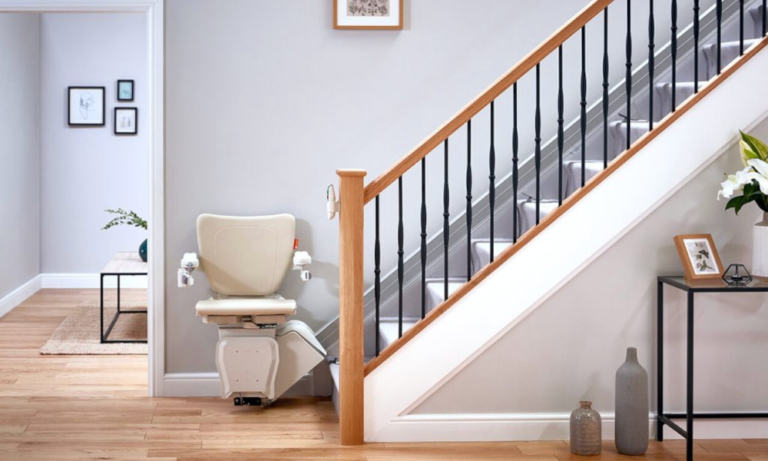
For many living with limited mobility, a stairlift brings the gift of independence at home.
These vital pieces of equipment can transform a home, allowing someone to continue living comfortably in familiar surroundings rather than facing the upheaval of moving to a single-level property or into care.
Yet, there is one thing that poses a barrier to those considering a stairlift: price. This article will break down the true costs of a stairlift, and explore the financing and VAT exemptions that are available to people in the UK.
If you’re interested in a stairlift, keep reading to learn more…
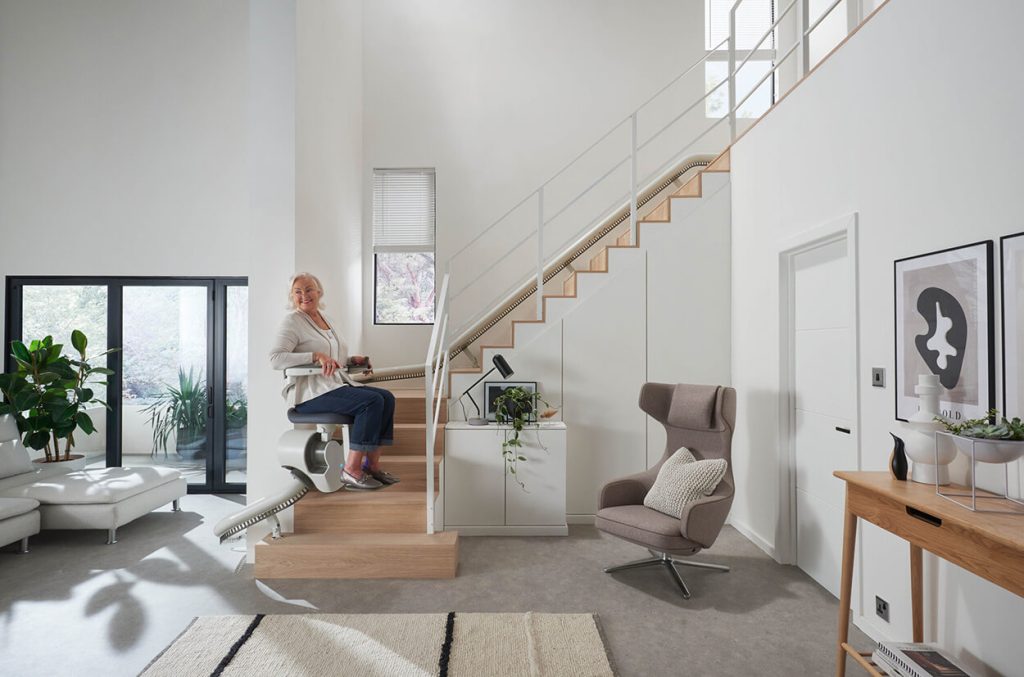
How much does a stairlift cost?
The answer is: it varies.
There are a large number of factors to consider, from the complexity of your staircase, the number of bends, the length of track needed, additional park points, reverse drive lifts, two-way powered swivels, and the requirements of your mobility.
Beyond those considerations, there are the additional costs, such as installation fees, maintenance and repair charges, and running costs, all of which need to be factored into the overall budget of a stairlift.
Let’s break those points down, starting with the actual price of a stairlift, which, as we already mentioned, varies.
Why such variation? Stairlifts are often bespoke solutions. A survey by Which? found the average cost of a stairlift to be £3,867. This gives us a useful benchmark, but it’s important to remember that every home is different.
The biggest distinction in price comes when choosing between straight and curved models, because it determines whether the rail can be fitted as a standard piece or must be custom-built to match the staircase.
Straight stairlifts
Straight stairlifts are the most common and the most affordable. They are designed for staircases without bends, curves, or intermediate landings, which makes installation relatively straightforward.
The average cost for a new straight stairlift, including installation, is around £2,275, though prices can range between £1,500 and £4,500 depending on the brand chosen and features required.
For those on a tighter budget, reconditioned stairlifts usually cost between £1200 and £3000, though these too will vary in price depending on availability.
If you’re interested in a straight stairlift, you can view the range at Simply Stairlifts here.
Curved stairlifts
Curved stairlifts are a different story. Because they must be custom-built to fit staircases with bends, curves, or landings, they are significantly more expensive.
The average cost for a new curved stairlift, including installation, is approximately £4,985, but the range will usually fall in the £3,000 to £12,000 bracket, depending on the complexity of the staircase.
The higher price reflects the bespoke nature of the rail design. Each curve, bend, and landing requires precise measurement and manufacturing, which adds to both the production and installation costs.
Reconditioned curved stairlifts are sometimes available, with prices from around £3250, though as stated, these stairlifts are bespoke, and therefore seldom reconditioned.
View the curved stairlift range at Simply Stairlifts.
Specialised stairlift types
Beyond straight and curved models, there are specialised stairlifts designed for particular needs. These include outdoor stairlifts, standing (or perch) stairlifts, heavy-duty stairlifts, and platform stairlifts for wheelchair users.
Outdoor stairlifts are built to withstand the elements, with weather-resistant materials and protective covers. Prices hover around the £3,350 ballpark, with a typical range of £3,000 to £6,500.
Standing stairlifts are designed for those who struggle to sit or bend their knees. They can cost between £4,500 and £8,000, though some entry-level models start closer to £2,000–£3,000.
Heavy-duty stairlifts, built for users above the average weight capacity, range from £2,500 to £12,000.
Platform stairlifts, which accommodate wheelchairs, are the most expensive, often falling between £7,000 and £12,000.
The table below should help to clarify the differences between stairlift type prices*:
Stairlift type | Price range |
Straight stairlift | £1,200 – £3,500 |
Curved stairlift | £3,800 – £12,000 |
Outdoor stairlift | £3,000 – £6,500 |
Standing stairlift | £2,000 – £8,000 |
Heavy-duty stairlift | £2,500 – £12,000 |
Platform stairlift | £7,000 – £12,000 |
Buying a stairlift is not just about the upfront price. Like any piece of equipment, there are associated and ongoing costs that need to be considered.
These include installation, electricity, servicing, and repairs. Understanding these helps you plan realistically and avoid surprises later on.
What are the installation costs of a stairlift?
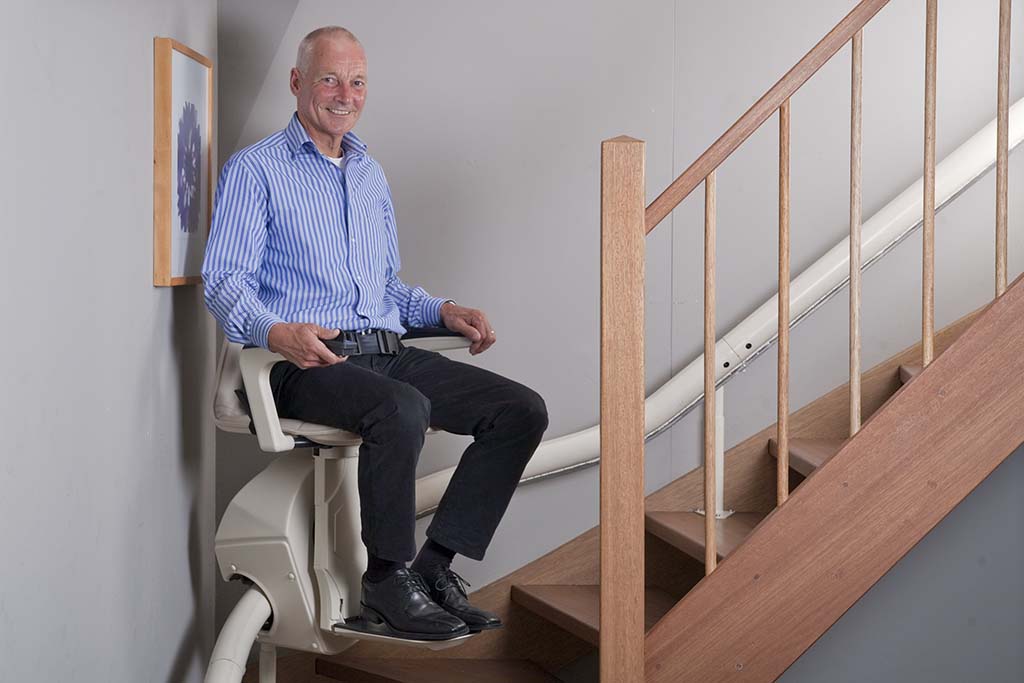
At Simply Stairlifts, installation is included in the purchase price, and is carried out by trained professionals. That said, it’s useful to know what installation costs look like when they are itemised.
For a straight stairlift, installation typically ranges from £500 to £1,000. Curved stairlifts, because of their bespoke nature, usually start from around £2,000.
Additionally, it’s worth thinking about the costs of removal. If you no longer need the stairlift, or if you’re replacing it with a newer model, removal can be arranged by professionals. In some cases, removal of the old unit is free of charge. This is worth checking at the point of sale, as it can save a significant expense.
What are the running costs of a stairlift?
As it is likely to be in frequent use, the cost of running a stairlift should not be overlooked.
Thankfully, stairlifts today are far more energy efficient than their predecessors, with credit given to advances in battery technology and smart charging systems.
On average, a stairlift will make around 14 journeys per day, powered by rechargeable batteries that draw very little electricity. Once fully charged, most modern units stop consuming power, further reducing waste and keeping costs low.
In practical terms, the electricity required is minimal. A stairlift uses about 24 watts per hour, which equates to less than £10 per year in energy costs under typical usage patterns. To put this into perspective, a washing machine consumes around 700 watts per hour and costs closer to £50 annually.
What are the service costs of a stairlift?
However, electricity costs are only part of the picture. Like any mechanical device, stairlifts need regular servicing.
Annual maintenance is advised under British Safety Standards, ensuring that the lift remains safe and reliable.
At Simply Stairlifts, a standard service is priced at £95, which is a reasonable figure for peace of mind. Learn more about our stairlift servicing here.
The lifespan of a stairlift is generally between 10 and 12 years, provided it is serviced regularly. Batteries, which typically last three to five years, generally cost between £100–£200 to replace.
Throughout the stairlift’s lifecycle, there are a number of issues that could arise that require repair. Whatever the reason for your stairlift malfunction, Simply Stairlifts offers stairlift repair services to those in the west and south-west of England. Learn more about our stairlift repair services here.
Factoring in these cycles of maintenance and replacement helps you plan for the long term.
What stairlift financing options and grants are available?
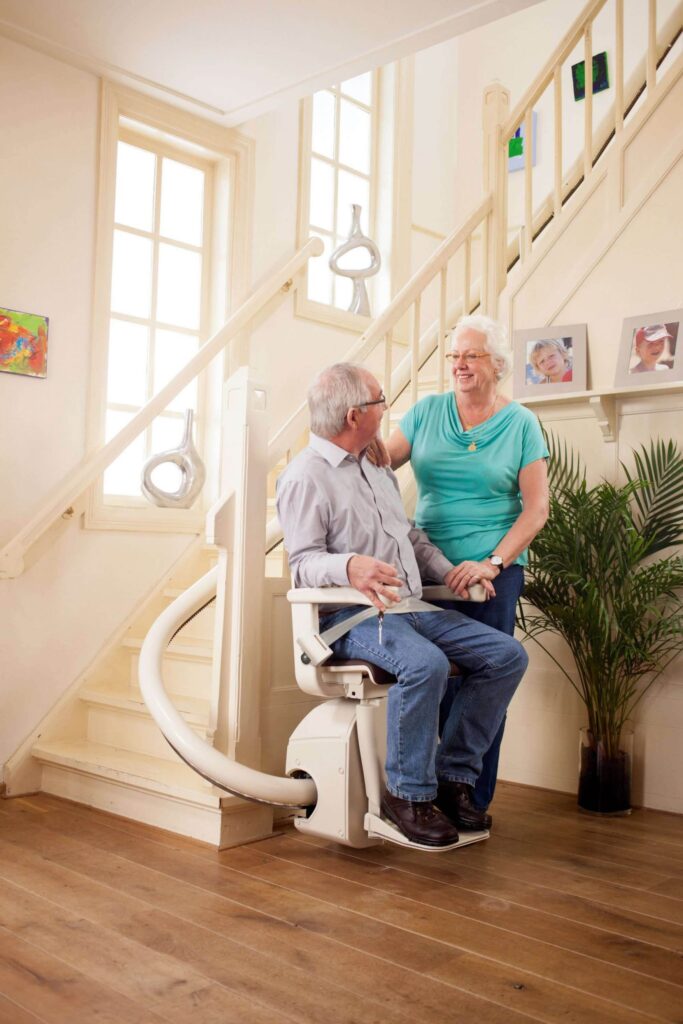
There are several ways to ease the financial burden of a stairlift.
In the UK, support is available through government grants, local councils, and charitable organisations:
Government stairlift grants
The most widely recognised form of support is the Disabled Facilities Grant (DFG).
This grant is available in England, Wales, and Northern Ireland and is designed to help with home adaptations that improve accessibility, including stairlifts, making the DFG one of the most relevant sources of funding.
The maximum grant in England is £30,000, £36,000 in Wales, and £25,000 in Northern Ireland, though the actual amount awarded depends on a means test. This means your income, savings, and household circumstances are assessed to determine eligibility.
To apply for a DFG, you’ll need two written estimates from stairlift companies. Once submitted, the application is reviewed by your local authority, and if approved, the grant can cover a substantial portion of the cost.
In Scotland, the equivalent support is provided through the Scheme of Assistance, which offers a minimum of 80% of the eligible cost for qualifying households, easing most of the financial burden for those who meet the criteria.
It’s also worth noting that while the NHS does not directly provide stairlifts, an Occupational Therapist assessment can be arranged. This assessment may lead to referrals for funding or grants, so that the medical need is properly recognised in the application process.
Charitable support
Charities often help to bridge the gap for those who may not qualify for government assistance or who need additional support. While free stairlifts are never guaranteed, charities can sometimes cover the full cost or provide significant subsidies.
Some of the most notable organisations include:
- Royal Agricultural Benevolent Institution (RABI): offers grants and support for essential home repairs and personal need costs to farming families in need
- SSAFA: provides support for current and former members of the armed forces and their families
- Independence At Home: offers financial help towards the cost of living independently at home, usually applied for through health or social care workers
- Margaret’s Fund: provides financial assistance to women with TB and other lung conditions
Even if you don’t qualify for government support, charitable funding may still be available, particularly if you have a strong connection to a specific community or profession.
To make things clearer, here’s a table summarising the main sources of financial support:
Source of support | Eligibility | Requirements |
England, Wales, NI, based on welfare needs | Two written estimates & local authority approval | |
Scotland, residents requiring home adaptations | Application via local council | |
NHS Referral | Based on medical need | Occupational Therapist assessment |
Farming families | Demonstrated financial need | |
Armed forces members and families | Proof of service connection | |
Individuals with health/social care needs | Application via health/social care worker | |
Women with TB or other lung conditions | Application via health/social care worker |
It’s worth noting that this list is not exhaustive, but it covers the most common routes available to UK households. For anyone considering a stairlift, it’s worth contacting local councils, healthcare professionals, and charities early in the process.
VAT relief and exemptions for stairlifts
One of the most overlooked aspects when calculating the cost of a stairlift is VAT.
In the UK, stairlifts can qualify for significant VAT relief, which can reduce the overall cost by hundreds of pounds. There are two different ratings that apply, zero-rated VAT (0%) for disabled individuals, and reduced rate VAT (5%) for older people:
Zero-rated VAT (0%) for disabled individuals
For those who are chronically sick or disabled, stairlifts designed solely for domestic use are eligible for zero-rated VAT. This means that no VAT is charged at all. To qualify, the purchaser must meet specific criteria:
- They must be chronically sick or disabled, defined as having a long-term impairment or illness that substantially affects daily life.
- The stairlift must be purchased for personal or domestic use, not for business or commercial purposes.
- Temporary disabilities, such as a short-term injury, do not qualify.
The process is straightforward. At the point of sale, the customer completes a written eligibility declaration, confirming their status. Once this is done, the stairlift is supplied without VAT.
It’s important to note that VAT cannot be refunded after purchase, so the declaration must be completed before the transaction is finalised.
Reduced rate VAT (5%) for older people
There is also a reduced VAT rate available for individuals aged 60 or over. This applies to certain mobility aids, including stairlifts, when they are supplied and installed in a private home.
Unlike the zero-rated exemption, this is not based on disability but on age.
The reduced rate is 5%, which still represents a significant saving compared to the standard 20%.
This reduced rate is separate from the zero-rated VAT for disabled individuals. In practice, this means that households should carefully consider which category they fall into, as the difference between 0% and 5% VAT can be considerable.
VAT relief is a practical way of making stairlifts more affordable. The savings can be the deciding factor in whether a stairlift is purchased sooner rather than later.
Interested in a stairlift?
Then you’re in the right place. At Simply Stairlifts, we install affordable stairlifts on curved or straight staircases, indoors or out, for the elderly, infirm, chronically ill, disabled or mobility impaired. We help anyone who is struggling with the stairs, even if you only need a stairlift temporarily.
We are experienced electrical and mechanical engineers qualified to install, remove, repair and service any stairlift in South West England. If you’re interested in buying a new or reconditioned stairlift, you can contact our team today for a free consultation.
Contact our team now
Find out more helpful information about stairlifts on the Simply Stairlifts blog…
Tips on Stairlift Maintenance | What to look for in a Stairlift supplier? | Benefits of a stairlift to the elderly or disabled
* Disclaimer
Prices mentioned in this article are industry average prices (in November 2025, subject to change), and are not Simply Stairlifts’ direct prices. For a clearer understanding of the cost of a stairlift in your home, please arrange a free consultation with our team.